
Mexico Must Extend Cartagena’s Protection Principles to Haitian Asylum Seekers

HUMAN RIGHTS MOVEMENT

Mexico Must Extend Cartagena’s Protection Principles to Haitian Asylum Seekers

Intersecting crises in Haiti have left tens of thousands of Haitians no choice but to flee their country, and Haitians who fled in prior years are unable to return home. A report by Centro de Derechos Humanos Fray Matías de Córdova A.C. and the Global Justice Clinic shows why Mexico–and, by extension, all countries that have signed the Cartagena Declaration on Refugees–must grant Haitians refugee status. 

Cover art graphics

The report comes at a critical moment. Haiti currently faces extraordinary violence and a near-complete collapse of state institutions. Armed groups killed more than 1,500 people in the first three months of 2024, displaced more than 360,000 people within Haiti’s borders, and seized control of the capital, ports, and hospitals. Sexual violence is endemic. Escalated violence and targeted attacks on government infrastructure in March 2024 plunged Haiti into a two-months long state of emergency. 

Mexico is one of the many countries that Haitian people have migrated to in the past decade. Tens of thousands of Haitians enter Mexico every year. Mexico has incorporated the Cartagena Declaration–which provides a broader definition of “refugee” than the 1951 Refugee Convention and 1966 Protocol–into its domestic law, legally binding it to grant refugee status to people who, based on an objective analysis of the circumstances in their country of origin, meet the elements of the declaration. This report establishes how three of the Declaration’s elements–generalized violence, massive violations of human rights, and other circumstances that seriously disturb public order–are pervasive in Haiti.

Between 2021 and 2023, Mexico approved approximately 5,200 out of more than 110,000 Haitians’ refugee applications — representing a 4.6% approval rate. In those years Haitians were also the nationality that filed the most refugee applications in Mexico.

This disproportionately low approval rate of Haitian applicants, who by any measure face persecution and extremely challenging conditions at home, flies in the face of Mexico’s legal obligations to establish nondiscriminatory migratory procedures.

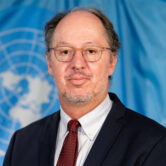
Enrique Vidal, Interim Director of CDH Fray Matías.

Haitians living outside of Haiti often lack access to basic human rights, face anti-Black discrimination, and in many countries, live under the threat of being sent back to Haiti. Pathways to legal status in other countries are essential for Haitians seeking safety, but governments rarely grant legal status to Haitians and, when they do, protections are often temporary.

Recognizing Haitian nationals as refugees under the Cartagena Declaration is one necessary step to correct the systemic denial of Haitians’ rights. In doing so, Mexico could pave the way for greater protection of human rights in the hemisphere. 

Mexico has the opportunity to be a leader in protecting the rights of Haitian people in the region. Governments throughout the region must assess country conditions objectively, and cease to discriminate against the Haitian people

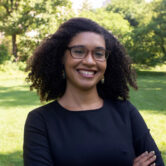
Gabrielle Apollon, Director of the Haitian Immigrant Rights Project at the Global Justice Clinic, in light of the upcoming 40th anniversary of the signing of the Cartagena Declaration. 

GJC and CDH Fray Matías launched the report, in Spanish, in Mexico City in late April 2024. They met with representatives of Mexican government agencies, including the Comisión Mexicana de Ayuda a Refugiados (Mexican Commission for Refugee Assistance) and the Secretaría de Relaciones Exteriores (Secretariat of Foreign Affairs) to urge them to apply the Cartagena Declaration to Haitian nationals. GJC and Fray Matías staff also observed firsthand the inhumane living conditions that many Haitian migrants and asylum-seekers endure in migrant encampments in Mexico. These conditions underscore the urgency of providing greater refugee protections for Haitians.

Today, GJC and CDH Fray Matías make this report available in English. Although the Mexican government remains the primary advocacy target, this report presents the case for all signatories to the Cartagena Declaration to extend refugee protection to Haitian nationals, and for countries throughout the Hemisphere to provide maximum protections to Haitian migrants and asylum-seekers.

May 24, 2024. For more information, please contact Gabrielle Apollon (English and Kreyòl) or Ellie Happel (English, Kreyòl, Spanish).
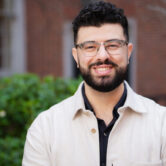
Sienna Merope-Synge

Sienna Merope-Synge

Sienna Merope-Synge
Co-Director, Caribbean Climate Justice Initiative
Global Justice Clinic

Sienna Merope-Synge is the Co-Director of the Caribbean Climate Justice Initiative and the Director of the Indigenous Land Rights and Earth Defense project through the Global Justice Clinic. Both projects partner with communities and organizations on the frontlines of the climate crisis to defend their environmental, economic, social and cultural rights, and support efforts to secure land rights and build community power.

Sienna was previously the Legal Director at the Institute for Justice and Democracy in Haiti (IJDH), where she led the organization’s work seeking accountability for emblematic human and environmental rights violations in Haiti, including efforts to secure remedies for victims of the UN-introduced Haiti cholera epidemic and child support for victims of sexual exploitation by UN peacekeepers. She worked between New York and Port-au-Prince from 2015 to 2020 and speaks fluent French and Haitian Creole.

Sienna received her LLM from NYU School of Law in 2015, where she was a Hauser global scholar. She holds political science and law degrees with first class honors from the University of Melbourne, Australia.

Rob Lothman

Rob Lothman

Rob Lothman
Legal and Policy Director
Prevention Project

Rob Lothman is the Legal and Policy Director of the Prevention Project, where he orchestrates project strategy, research and program administration, cross-workstream initiatives, and development of the prevention framework. 

Prior to joining the Prevention Project, Rob worked in a range of legal, policy, teaching, and business contexts around the globe. As a Global Public Sector Marketing Manager with Cisco Systems, Rob led strategic marketing efforts for a multibillion-dollar global education portfolio, promoted CSR programs expanding access to education, and managed partnerships with governments, universities, and NGOs. At Shrewsbury School, Rob served as Peter J. Gomes Fellow, teaching English, history, philosophy, and social science research methods and developing course modules on transitional justice, human rights, and political repression. Rob also researched nuclear nonproliferation and disarmament at a Moscow-based NGO. 

Rob is a licensed attorney in Massachusetts, and he holds a J.D. from the University of Michigan Law School, where he studied intersections between human rights, transitional justice, and constitutional law. Rob received his A.B. in Social Studies and a Minor in Russian from Harvard University, where he studied political repression and mass human rights abuses in the Soviet Union.

Pablo de Greiff

Pablo de Greiff

Pablo de Greiff
Senior Fellow; Director
Prevention Project, Transitional Justice Program

Courses

Pablo de Greiff directs the Transitional Justice Program and the Prevention Project at the Center. He served as the first UN Special Rapporteur on the promotion of truth, justice, reparation, and guarantees of non-recurrence from 2012 to 2018, as a member of the UN Independent Investigation on Burundi (UNIIB) in 2015-16, and since 2019 serves in the UN Secretary General’s Civilian Advisory Board.

From 2001 to 2014, Pablo was the Director of Research at the International Center for Transitional Justice. Born in Colombia, Pablo graduated from Yale University (BA) and from Northwestern University (PhD). Before joining the ICTJ, he was an associate professor with tenure in the Philosophy Department at the State University of New York at Buffalo, where he taught ethics and political theory. He was also a Laurance S. Rockefeller fellow at the Center for Human Values at Princeton University and held a concurrent fellowship from the National Endowment for the Humanities.

Pablo is the editor or co-editor of ten books, including Jürgen Habermas’s The Inclusion of the Other (MIT Press, 1998), Global Justice and Transnational Politics (MIT Press, 2002), Las Razones de la Justicia: A Festschrift for Thomas McCarthy (México: UNAM, 2006), and in areas related to transitional justice, The Handbook of Reparations (Oxford, 2006), Transitional Justice and Development: Making Connections (SSRC, 2009), and Disarming the Past: Transitional Justice and Ex-combatants (SSRC, 2010), among others.

Pablo has published extensively on transitions to democracy, democratic theory, and the relationship between morality, politics, and law, and is on the board of editors of the International Journal of Transitional Justice and of several book series related to the topic.  His articles include “Theorizing Transitional Justice,” in Transitional Justice, NOMOS, vol. LI, Melissa Williams, Rosemary Nagy, and Jon Elster, eds. (NYU Press, 2012).

He has lectured at NYU, Yale, Harvard, Columbia, Cornell, European University Institute, and in universities across Europe and Latin America.

Pablo contributed to the drafting of the final report of the Stockholm Initiative on DDR, authored the Office of the High Commissioner for Human Rights’ Rule-of-Law Tools for Post-Conflict States: Reparations Programmes, and was an adviser to the World Bank on the process leading to the World Development Report 2011: Conflict, Security, and Development. He has been an adviser to different transitional justice bodies in Peru, Guatemala, Morocco, Colombia, and the Philippines. He is the Chair of the Advisory Board of the Open Society’s Justice Initiative, and a member of the advisory boards of the International Center for Transitional Justice, the Archives and Dealing with the Past Project, and a member of the boards of the Global Survivor’s Fund, the Universal Rights Group, and of the International Center for MultiGenerational Legacies of Trauma.

During his term as Special Rapporteur, Pablo conducted country visits to Uruguay, the United Kingdom and Northern Ireland, Tunisia, Spain, Burundi, Sri Lanka and presented over a dozen reports to the UN Human Rights Council and the UN General Assembly.

Mikhal Shachar

Mikhal Shachar

Mikhal Shachar
Prevention Project
Consultant

Mikhal Shachar is an independent consultant specializing in international human rights law and international humanitarian law.

Mikhal joined the Prevention Project as Policy & Program Manager in June 2022, after graduating from the NYU School of Law with an LL.M. in International Legal Studies. Mikhal managed the Constitutional and Legal Tools, Security, Civil Society, Peacebuilding, Education, and Environment workstreams.

Between 2017-2021, Mikhal was a legal advisor at the Israeli Ministry of Justice Office of Deputy Attorney General for International Law, where she drafted legal positions on issues of compliance with public international law.

Mikhal also holds an LL.B. in Law and Political Science from Tel-Aviv University.

Katarina Sydow

Katarina Sydow

Katarina Sydow
Senior Advisor to UN Special Rapporteur on the Independence of Judges and Lawyers

Katarina Sydow is the Senior Advisor to the UN Special Rapporteur on the independence of judges and lawyers, Professor Margaret Satterthwaite.

Katarina was previously Director of the Human Rights and Privatization Project at the Center, where her research focused on poverty and inequality, and the human rights impacts of commodifying essential services such as healthcare, water and education.

Katarina has a broad interest in international law and human rights issues. She has worked as a consultant for UN Women and the United Nations Development Programme, contributing to policy briefs concerning the Women, Peace and Security agenda and the Global Focal Point for the Rule of Law. Katarina was also an NYU International Law and Human Rights Fellow at the United Nations Department of Peace Operations, Justice and Corrections Service.

Before moving to the United States, Katarina worked as a barrister in the UK for eight years, where she was ranked in Legal 500 and Chambers and Partners. She specialized in public law, human rights and medical law.

Katarina holds an LLM in International Legal Studies from NYU, a Graduate Diploma in Law from City, University of London, and a BA in Modern History from the University of Oxford. At NYU, she was an Arthur T. Vanderbilt Scholar and the recipient of the Jerome Lipper Award for International Legal Studies and the Howard Greenberger Award for comparative law.

Gabrielle Apollon

Gabrielle Apollon

Gabrielle Apollon
Director, Haitian Immigrant Rights Project
Global Justice Clinic

Gabrielle Apollon directs Rights without Borders: Haitian Immigrant Rights part of the Global Justice Clinic, through which she is building a hemisphere-wide coalition of Haitian activists, lawyers and allies, collaborating to combat the anti-Black racism, exclusion and cyclical displacement Haitians have faced as they’ve migrated throughout the Western Hemisphere.

She is also co-leading the Clinic’s work on climate migration, documenting and challenging anti-Blackness as it relates to Haitians’ experiences of climate harms, in Haiti as well as in transit and destination countries. Gabrielle previously served as Managing Attorney at The Door: A Center for Alternatives, where she represented young people in immigration and family law matters. While at The Door, Gabrielle expanded services for Francophone immigrants and became a New York Community Trust Leadership Fellow. A 2015 graduate of NYU School of Law, Gabrielle was an AnBryce Scholar and served as a student advocate in the Global Justice and Children’s Rights Clinics. As a student, Gabrielle earned a Ford Foundation Public Interest Law Fellowship to work with Conectas in Brazil in 2013, documenting human rights violations of Haitian migrants en route to Brazil.

Prior to law school, Gabrielle worked at the United Nations Office of the Special Envoy to Haiti as a research specialist. She holds a Bachelor of Arts and a Master of International Affairs from Columbia University, where she was awarded the J.W. Saxe Memorial Award for Public Service and Harry J. Carman Fellowship. While studying political science and international development, Gabrielle interned with the Council on Foreign Relations and Haiti’s presidential commission, Groupe de Travail sur l’Education et la Formation (GTEF). Gabrielle speaks French and Haitian Creole. She serves as the Vice President of the Board of Directors of St. Hope Leadership Academy.

Ellie Happel

Ellie Happel

Ellie Happel
Interim Director, Global Justice Clinic
Co-Director, Haiti Justice and International Accountability
Co-Director, Caribbean Climate Justice Initiative

Ellie co-directs the Global Justice Clinic projects Haiti Justice and International Accountability and the Caribbean Climate Justice Initiative.

Both projects partner with social movements and communities in Haiti and the Caribbean to defend their environmental, economic, social and cultural rights; to prevent rights violations, particularly by international actors; and to support efforts to build community power in the face of extractive development models and the global climate crisis. Ellie also co-teaches the Global Justice Clinic Seminar.

Ellie lived and worked in Haiti between 2011 and 2017, first on cases of forced eviction in the internally displaced people (IDP) camps in Port-au-Prince, and then to develop the Global Justice Clinic’s partnership with Kolektif Jistis Min (Justice Mining Collective), a coalition of Haitian social movement organizations that came together to monitor Haiti’s nascent gold mining industry.

Ellie is a 2011 graduate of NYU School of Law where she was a Root Tilden Kern scholar. She holds a B.A. magna cum laude in Metropolitan Studies from New York University. Ellie is fluent in Spanish and Haitian Creole.